- Home
- About
- Institute
- Academics
- Campus and Facilities
- Research and Development
- Trainning and Placement
- Student Life
- Mandatory Disclouser

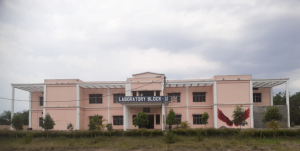
The Central Workshop of Parala Maharaja Engineering College, Berhampur, is a key academic and technical support facility that plays a vital role in imparting practical manufacturing education and skill-based training to engineering students. Serving as a bridge between theoretical knowledge and industrial practice, the workshop provides students with hands-on experience in manufacturing processes, fabrication techniques, machine operations, and product realization. As a common facility for all engineering disciplines, the Central Workshop offers structured practical training to undergraduate students, enabling them to transform engineering concepts and drawings into tangible products and components. This experiential learning enhances their technical competence, creativity, problem-solving skills, and confidence in engineering design and manufacturing.
The workshop houses several specialized sections, including the Welding Shop, Fitting Shop, Foundry Shop, Machine Shop, Turning/Lathe Shop, and CNC Shop. These facilities provide training in metalworking, machining, joining processes, casting, precision manufacturing, and computer-controlled production technologies. The workshop also supports project-based learning by facilitating the fabrication of academic projects, prototypes, and innovative product designs.
Beyond its instructional role, the Central Workshop serves as a central fabrication and manufacturing support center for faculty members, research scholars, and postgraduate students. It provides design, machining, welding, fabrication, and assembly assistance for undergraduate projects, M.Tech. dissertations, Ph.D. research work, sponsored research projects, and the development of experimental setups, testing rigs, special-purpose fixtures, and customized components. The workshop significantly contributes to research and innovation activities across various departments of the institute.
The Central Workshop also extends technical support for consultancy assignments and industry-oriented projects undertaken by PMEC Berhampur. Through its manufacturing expertise, modern equipment, and skilled technical personnel, the workshop facilitates prototype development, product realization, technology transfer activities, and industrial problem-solving initiatives. Such engagements strengthen academia–industry collaboration and provide valuable exposure to students and researchers in addressing real-world engineering challenges.
Committed to meeting the evolving demands of modern manufacturing and Industry 4.0/5.0 technologies, the Central Workshop continuously upgrades its infrastructure, equipment, and training methodologies. By integrating conventional manufacturing practices with advanced machining, automation, and computer-aided manufacturing technologies, the workshop fosters innovation, entrepreneurship, research excellence, and technical proficiency. Through these efforts, it contributes significantly to the holistic development of future engineers and supports the mission of PMEC Berhampur in delivering quality technical education and promoting technological advancement.
Educational Objectives of Central Workshop
Program Outcomes (POs) Supported by Central Workshop
| PO No. | Program Outcome | Contribution of Central Workshop |
| PO1 | Engineering Knowledge | Apply knowledge of mathematics, science, and engineering fundamentals to manufacturing and fabrication processes. |
| PO2 | Problem Analysis | Identify and analyze manufacturing, machining, fitting, and welding problems encountered during workshop practice. |
| PO3 | Design and Development of Solutions | Fabricate engineering components and develop practical solutions using appropriate manufacturing techniques. |
| PO4 | Investigation of Complex Problems | Conduct experiments, measurements, and process evaluations to understand manufacturing operations and product quality. |
| PO5 | Modern Tool Usage | Utilize modern engineering tools, CNC machines, welding simulators, measuring instruments, and manufacturing equipment. |
| PO6 | Engineer and Society | Understand the role of manufacturing in societal development and industrial growth while ensuring safe engineering practices. |
| PO7 | Environment and Sustainability | Practice efficient utilization of materials, waste minimization, energy conservation, and sustainable manufacturing methods. |
| PO8 | Ethics | Follow professional ethics, workshop discipline, and safety regulations during fabrication and machining activities. |
| PO9 | Individual and Team Work | Work effectively as an individual and as a member of multidisciplinary teams during workshop assignments and projects. |
| PO10 | Communication | Prepare job sheets, technical reports, sketches, and communicate manufacturing procedures effectively. |
| PO11 | Project Management and Finance | Plan, organize, and execute fabrication activities considering resources, time, materials, and cost constraints. |
Course Outcomes (COs) for Workshop Practice
Upon successful completion of Workshop Practice, students will be able to:
CO1: Identify and safely use common workshop tools, machines, and measuring instruments.
CO2: Perform fitting, welding, machining, drilling, and fabrication operations according to engineering drawings.
CO3: Manufacture simple engineering components using conventional workshop practices.
CO4: Demonstrate safe working procedures, professional ethics, and environmental awareness in workshop operations.
CO5: Work effectively in teams and communicate technical information related to manufacturing activities.
CO6: Apply modern manufacturing tools and CNC technology for component fabrication and prototype development.
Program Specific Outcomes (PSOs) Supported Through Workshop Training
PSO1: Apply manufacturing, fabrication, and machining principles to design and develop engineering components and systems.
PSO2: Utilize conventional and modern manufacturing tools, CNC systems, and welding technologies for industrial and research applications.
PSO3: Demonstrate practical competency in product realization, prototyping, testing, and maintenance activities relevant to engineering practice.
Role of Central Workshop and Graduate Attributes Development
The Central Workshop serves as an enabling platform for experiential learning, innovation, and professional skill development. It provides an environment where students can translate engineering ideas into functional products, develop an appreciation for manufacturing quality, and gain exposure to real-world engineering challenges. Through active participation in workshop activities, students cultivate a systematic approach to design realization, material selection, process planning, and component fabrication. The workshop contributes significantly to the development of industry-relevant competencies by fostering technical proficiency, critical thinking, teamwork, and a culture of continuous improvement. It also promotes innovation and entrepreneurship by supporting prototype development and product realization activities. Exposure to practical engineering tasks helps students understand the importance of precision, safety, quality control, resource optimization, and professional responsibility in engineering practice. As a result, the Central Workshop plays an important role in preparing students for higher studies, research, industrial careers, and entrepreneurial ventures.
Graduate Attributes Developed Through Workshop Practice
Activities Supported by the Central Workshop
From the Superintendent’s Desk

Welcome to the Central Workshop at Parala Maharaja Engineering College (PMEC), Berhampur. In the journey of engineering education, theoretical knowledge forms the foundation, but it is hands-on engineering experience that builds true innovation. The Central Workshop serves as the ultimate practical backbone of our institute, a central facility where foundational blueprints are transformed into physical realities.
Our facility is uniquely structured to bridge the gap between academic theory and real-world manufacturing engineering. Through our specialized engineering domains, including the Machine Shop, Turning/Lathe Shop, Fitting Shop, Welding Shop, Foundry Shop, and the advanced CNC Shop, undergraduate students encounter an environment that mirrors modern industrial settings. Here, young minds don’t just study processes; they operate equipment, perform precision job work, and actively experiment with core fabrication techniques.
Beyond day-to-day curriculum lab work, our mission is to foster an ecosystem of innovation. The Central Workshop proudly serves as an incubation hub where students design and fabricate their critical academic, B.Tech capstone, and competitive engineering projects. Furthermore, we extend our resources to support diverse institutional, M.Tech, and faculty research projects, driving technological development right from our campus floor.
Equipped with classic conventional machinery alongside advanced automated systems like the CNC Jobber Junior, we ensure our students graduate with a deep respect for industrial safety, precision craftsmanship, and digital manufacturing trends.
I invite you to explore our workshops, engage with our highly skilled technical staff, and utilize this advanced facility to its fullest potential. Let us build, innovate, and engineer a better tomorrow.
Regards,
Dr. Chitrasen Samantra
Workshop Superintendent
Parala Maharaja Engineering College. Berhampur
| Sl. No | Employee Name | Designation | Contact No | Mail id | Photo |
1 | Dr. Chitrasen Samantra | Superintendent | – | | |
2 | Mr. Himansu Sekhar Panda | Machinist (CNC Operator, Turner) | – | [email protected] |  |
| 3 | Mr. Ajit Kumar Behera | Fitter | – | [email protected] |  |
| 4 | Mr. Krushna Chandra Padhy | Welder | – |  |
Workshop Facilities and Major Equipment
The Central Workshop of PMEC Berhampur is equipped with a comprehensive range of conventional and modern manufacturing facilities that support academic instruction, skill development, research, innovation, and consultancy activities. The workshop provides an integrated environment for experiential learning, enabling students to acquire practical knowledge of manufacturing processes, fabrication techniques, machine operations, quality inspection, and product realization. It also serves as a key technical resource for prototype development, project fabrication, experimental setup preparation, and research-oriented manufacturing activities. To facilitate specialized training and efficient utilization of resources, the workshop is organized into distinct sections, namely the Machine Shop, Fitting Shop, Welding Shop, and CNC Shop. Each section is equipped with industry-relevant machines, tools, and instruments that provide hands-on exposure to conventional and advanced manufacturing technologies. Together, these facilities contribute to the development of technical competence, problem-solving abilities, innovation, and industry readiness among students while supporting the academic, research, and outreach objectives of the institute.
1. Machine Shop
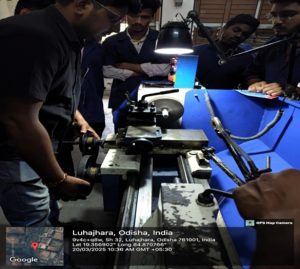
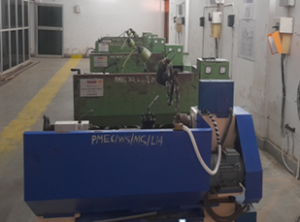
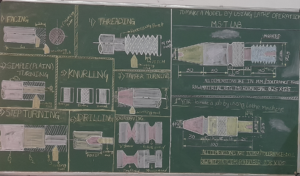
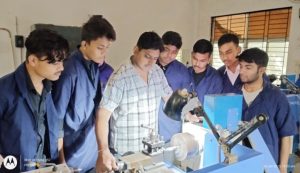
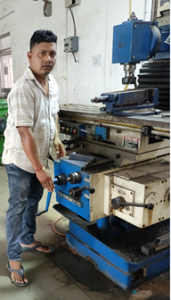
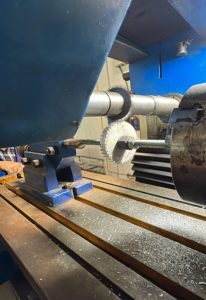
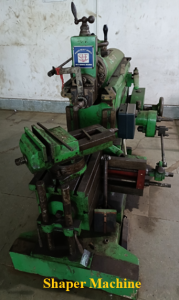
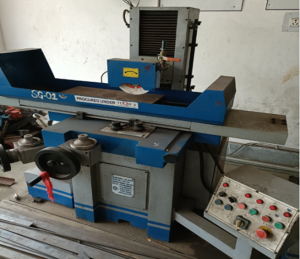
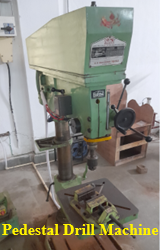
The Machine Shop is a core manufacturing facility of the Central Workshop that provides practical training in conventional machining and material removal processes. The shop enables students to gain hands-on experience in producing engineering components with the required dimensional accuracy, geometric tolerances, and surface finish. Through various machining operations, students develop an understanding of machine tool operation, cutting tool selection, machining parameters, process planning, and quality control. The facility supports academic instruction, project fabrication, prototype development, research activities, and consultancy assignments involving precision machining and component manufacturing.
Major Machines and Equipment
Machine Tools
Work-Holding and Supporting Devices
Cutting Tools
Measuring and Inspection Instruments
2. Fitting Shop
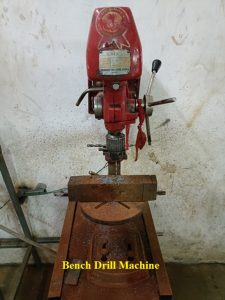
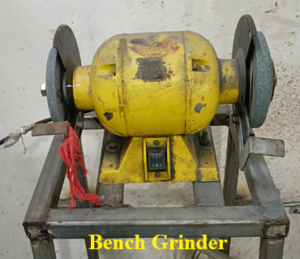
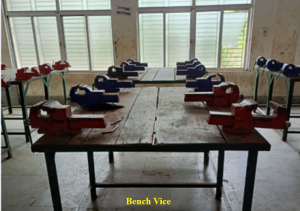
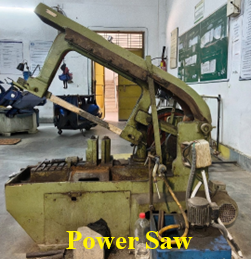
The Fitting Shop is one of the fundamental training facilities of the Central Workshop, designed to develop essential bench-work skills and craftsmanship among engineering students. The shop provides hands-on training in measuring, marking, cutting, chipping, filing, drilling, threading, and assembly operations, which form the foundation of manufacturing and maintenance engineering. Through practical exercises, students learn the importance of dimensional accuracy, precision, workmanship, and quality control in component fabrication and assembly. The facility also supports project fabrication, prototype development, repair and maintenance activities, and research-related fabrication work.
Major Equipment and Tools
Machine Tools and Work-Holding Equipment
Cutting, Shaping, and Threading Tools
Measuring and Marking Instruments
Hand Tools and Assembly Tools
3. Welding Shop
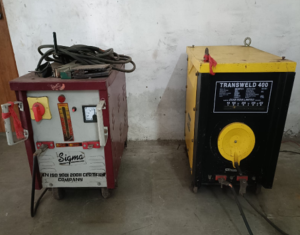
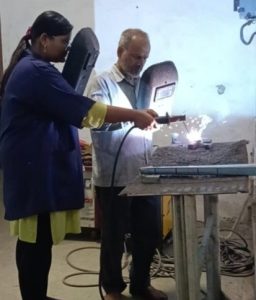
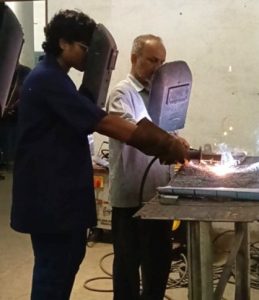
The Welding Shop is a specialized facility dedicated to training students in various metal joining, fabrication, and repair processes widely used in manufacturing, construction, automotive, and heavy engineering industries. The shop provides hands-on experience in conventional and advanced welding techniques, enabling students to develop practical skills in fabrication, assembly, maintenance, and structural manufacturing. In addition to academic training, the facility supports project work, prototype development, research activities, and consultancy assignments requiring welding and fabrication expertise.
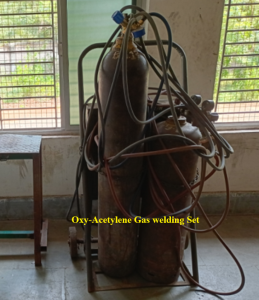
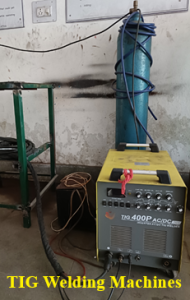
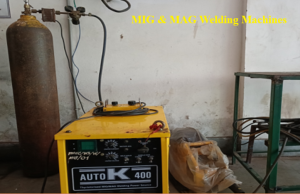
Major Equipment
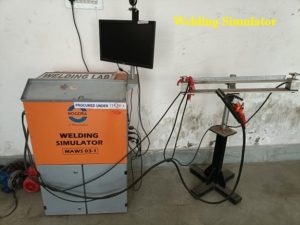
Welding Simulator: A virtual welding training system that enables students to learn and practice welding techniques in a safe, cost-effective, and environmentally friendly manner while improving welding skills and process understanding.
Arc Welding Machine (AC&DC Power Source)
4. CNC Shop
The CNC Shop serves as an advanced manufacturing and precision engineering facility within the Central Workshop. It provides students, researchers, and faculty members with hands-on exposure to computer numerical control (CNC) machining, modern manufacturing practices, and precision metrology techniques. The facility supports academic instruction, skill development, prototype fabrication, consultancy assignments, sponsored research projects, and the production of high-precision engineering components. Equipped with CNC machining systems and sophisticated inspection instruments, the shop enables accurate manufacturing, dimensional verification, and quality assurance in accordance with industrial standards.
Major Equipment
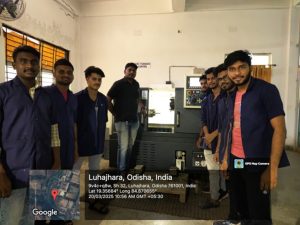
CNC Lathe Machine (Jobber Junior – Horizontal)