1. /
  2. Departments
  3. /
  4. Metallurgical and Materials Engineering
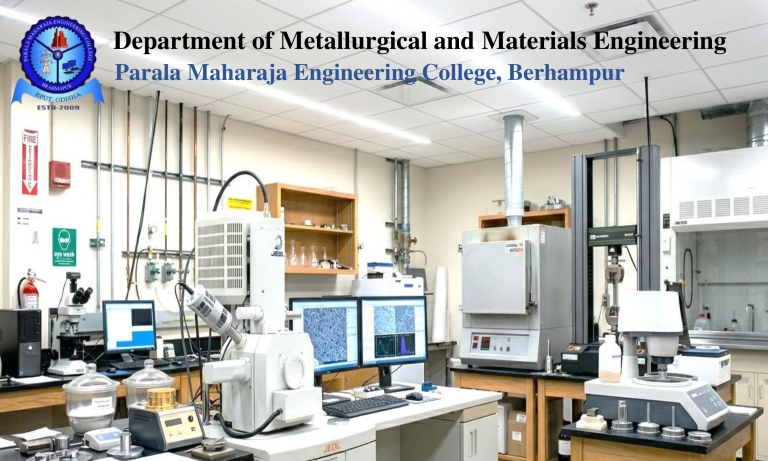
Department Title image (1)

Metallurgical and Materials Engineering

The Metallurgical and Materials Engineering department at PMEC is established in the year 2014 with 60 numbers of students offers a curriculum in Physical Metallurgy, Mechanical Metallurgy, Extractive Metallurgy, Metallurgical Thermodynamics, Phase Transformations, and Heat Treatment with modern electives in Nanomaterials, Composite Materials, and sustainable processing, equipping students for careers in Steelmaking, Ferro-alloy, Advanced Material Manufacturing, Automotive, Aerospace, Biomedical, and Rare Earth industries. Departmental laboratory facilities feature Modelling of Process Metallurgy, Furnaces for Casting, Optical Metallurgical Microscopes for Morphology, Hardness Tester for Hardness Analysis, and Sieve Shaker and jaw crusher for Process Metallurgy. Emphasizing outcomes by offering Industry Internships at SAIL plants, Tata Steel, HAL, JSW, NALCO, and DRDO.

Vision of the Department

To achieve excellence in the Metallurgical and Materials Engineering education field in developing innovative, sustainable, and high-performance materials through advanced research and engineering practices in the nation in frontier areas of metallurgy and materials science technology that offers relevant training, research, and development of the students, society, and country.

Mission of the Department

  • To produce well-trained metallurgical and materials engineering graduates with innovative thinking, knowledge, and skills to excel in higher education or to succeed in technical professions.
  • To create a vibrant and nurturing educational environment and prepare students with a broad outlook.
  • To carry out interdisciplinary research to address the needs of the metallurgy and material science field and society.
  • To promote an inclusive, safe, collaborative, and respectful community for learning and work in areas such as health, energy, and environment.

Programme Educational Objectives (PEOs)

  • PEO1: To equip graduates with the knowledge, skills, and competencies necessary to excel in Metallurgical and Materials Engineering careers, encompassing analysis, design, and management of systems and processes.
  • PEO2: To provide students with a solid foundation in mathematical, scientific, and engineering principles, as well as a comprehensive understanding of Metallurgical and Materials Engineering disciplines, including physical metallurgy, process metallurgy, corrosion, thermodynamics, and materials characterization.
  • PEO3: To foster interdisciplinary learning and collaboration, enabling students to develop innovative solutions to real-world problems, think critically, and work effectively in teams.
  • PEO4: To cultivate in students a multidisciplinary approach, strong communication skills, and an understanding of the social and ethical implications of engineering practices, preparing them for successful careers and lifelong learning.
  • PEO5: To create an academic environment that promotes excellence, professionalism, and social responsibility, empowering students to become responsible, informed, and engaged global citizens.

Program Outcomes (POs)

  1. Engineering knowledge: Apply the knowledge of mathematics, science, engineering fundamentals, and an engineering specialization to the solution of complex engineering problems.
  2. Problem analysis: Identify, formulate, review research literature, and analyze complex engineering problems, reaching substantiated conclusions using first principles of mathematics, natural sciences, and engineering sciences.
  3. Design/development of solutions: Design solutions for complex engineering problems and design system components or processes that meet the specified needs with appropriate consideration for the public health and safety, and the cultural, societal, and environmental considerations.
  4. Conduct investigations of complex problems: Lise research-based knowledge and research methods, including design of experiments, analysis and interpretation of data, and synthesis of the information to provide valid conclusions.
  5. Modern tool usage: Create, select, and apply appropriate techniques, resources, and modern engineering and IT tools, including prediction and modelling to complex engineering activities with an understanding of the limitations.
  6. The engineer and society: Apply reasoning informed by the contextual knowledge to assess societal, health, safety, legal and cultural issues and the consequent responsibilities relevant to the professional engineering practice.
  7. Environment and sustainability: Understand the impact of the professional engineering solutions in societal and environmental contexts, and demonstrate the knowledge of, and need for, sustainable development.
  8. Ethics: Apply ethical principles and commit to professional ethics and responsibilities and norms of the engineering practice.
  9. Individual and team work: Function effectively as an individual, and as a member or leader in diverse teams, and in multidisciplinary settings.
  10. Communication: Communicate effectively on complex engineering activities with the engineering community and with society at large, such as being able to comprehend and write effective reports and design documentation, make effective presentations, and give and receive clear instructions.
  11. Project management and finance: Demonstrate knowledge and understanding of the engineering and management principles and apply these to one's work, as a member and leader in a team, to manage projects and in multidisciplinary environments.
  12. Life-long learning: Recognize the need for, and have the preparation and ability to engage in independent and life-long learning in the broadest context of technological change.

Program Specific Outcomes (PSOs)

The program-specific outcomes are defined by the Department of Metallurgical and Materials Engineering as follows:

  • PSO1: Graduates will be able to apply mathematical, scientific, and engineering fundamentals to understand and solve metallurgical problems, including material selection, processing, and characterization. 
  • PSO2: Graduates can apply the integrated knowledge of structure-property correlations in material processing and product development, enabling them to design materials with specific properties for various applications.
  • PSO3: Graduates will be prepared for careers as scientists, engineers, or researchers in industries related to metals, materials, and manufacturing, with opportunities in areas like automotive, aerospace, electronics, and construction.

Career Opportunities:

Graduates in Metallurgical and Materials Engineering have a wide range of technical and non‑technical career opportunities across Core Industries and Research and Development sectors.

  • In core roles graduates are work as Metallurgists, Graduate Engineer Trainee (GET), Materials Engineers, Process Engineers, and Quality and Production Managers (QPM) in Public Sector Undertakings (PSUs) like; Steel Authority of India Limited (SAIL), Mishra Dhatu Nigam Limited (MIDHANI), Rastriya Ispat Nigam Limited (RINL), National Mineral Development Corporation (NMDC), Kudremukh Iron Ore Company Limited (KIOCL), Indian Oil Corporation Limited (IOCL), Bharat Heavy Electrical Limited (BHEL), Manganese Ore India Limited (MOIL), Metallurgical and Engineering Consultants (MECON), Jindal Steel & Power Limited (JSPL), National Aluminium Company Limited (NALCO), Hindustan Aeronautics Limited (HAL), and Hindustan Copper Limited (HCL).
  • In non‑core paths such as consulting, inspection, and research and development roles in Indian Space Research Organisation (ISRO), Baba Atomic Research Centre (BARC), Defence Research and Development Organization (DRDO), Council of Scientific and Industrial Research (CSIR), Indian Ordnance Factories (IOF), Tata Institute of Fundamental Research (TIFR), Indian Institute of Metals (IIM), and Ferro Scrap Nigam Limited (FSNL), focusing on lightweight alloys, composites, high‑temperature materials, and surface coatings. With growing emphasis on recycling, circular economy, and advanced manufacturing, graduates also have opportunities in roles related to scrap metal processing, environmental compliance, and sustainable materials design.
  • In higher studies, postgraduate programmes in relevant fields are available to talented applicants. Numerous institutions in India and beyond provide career-focused post-graduate degrees in the relevant field.

Welcome to the Department of Metallurgical and Material Engineering at Parala Maharaja Engineering College (PMEC).

Metallurgical and Material Engineering is a fascinating and dynamic field that encompasses the study of metals, alloys, and materials used in various industries. At PMEC, our department is committed to providing a comprehensive education that equips our students with the knowledge, skills, and expertise required for a successful career in this field.

Our dedicated faculty members are highly qualified and possess extensive industrial and academic experience. They are passionate about teaching, research, and innovation, and they strive to create a stimulating learning environment that nurtures creativity, critical thinking, and problem-solving abilities.

The curriculum offered by our department is designed to provide a strong foundation in metallurgical and material engineering principles. It covers a wide range of subjects, including physical metallurgy, mechanical behavior of materials, corrosion engineering, materials characterization, extractive metallurgy, and industrial metallurgy. The curriculum is regularly updated to incorporate the latest advancements and emerging technologies, ensuring that our students are well-prepared for the ever-changing industry landscape.

To complement the theoretical knowledge, we provide well-equipped laboratories and advanced research facilities. Our laboratories are equipped with modern equipment and instruments to facilitate hands-on learning and experimentation. Through practical sessions and research projects, we encourage our students to apply theoretical concepts and gain practical insights into metallurgical and material engineering practices.

At PMEC, we believe in holistic development and offer various opportunities for our students to develop their overall personality and skills. We encourage active participation in technical competitions, seminars, workshops, and industrial visits to enhance their technical knowledge, communication skills, and industry exposure. We also encourage students to engage in research projects, internships, and industrial collaborations to gain practical experience and prepare for their professional careers.

Our department maintains strong industry connections and collaborates with renowned organizations to bridge the gap between academia and industry. Through industrial visits, guest lectures by industry experts, and internships, we expose our students to real-world challenges and provide them with valuable insights into industrial practices. These interactions also facilitate potential career opportunities and networking for our students.

I invite you to explore our website to learn more about our faculty, laboratories, research projects, and other relevant information. Whether you are a prospective student, a current student, or a visitor seeking information about our department, we hope that our website serves as a valuable resource.

Please feel free to reach out to us if you have any queries or require further assistance. Our faculty and staff are here to support and guide you on your educational journey.

Thank you for visiting our website and considering the Department of Metallurgical and Material Engineering at PMEC. We look forward to being a part of your academic and professional growth.

Best regards,

Dr. Chitrasen Samantra

Head of the Department (I/C) (MME)

Parala Maharaja Engineering College (PMEC)


Courses Offered

The department is offering 4 Year B.Tech Degree course in Metallurgical and Materials Engineering.
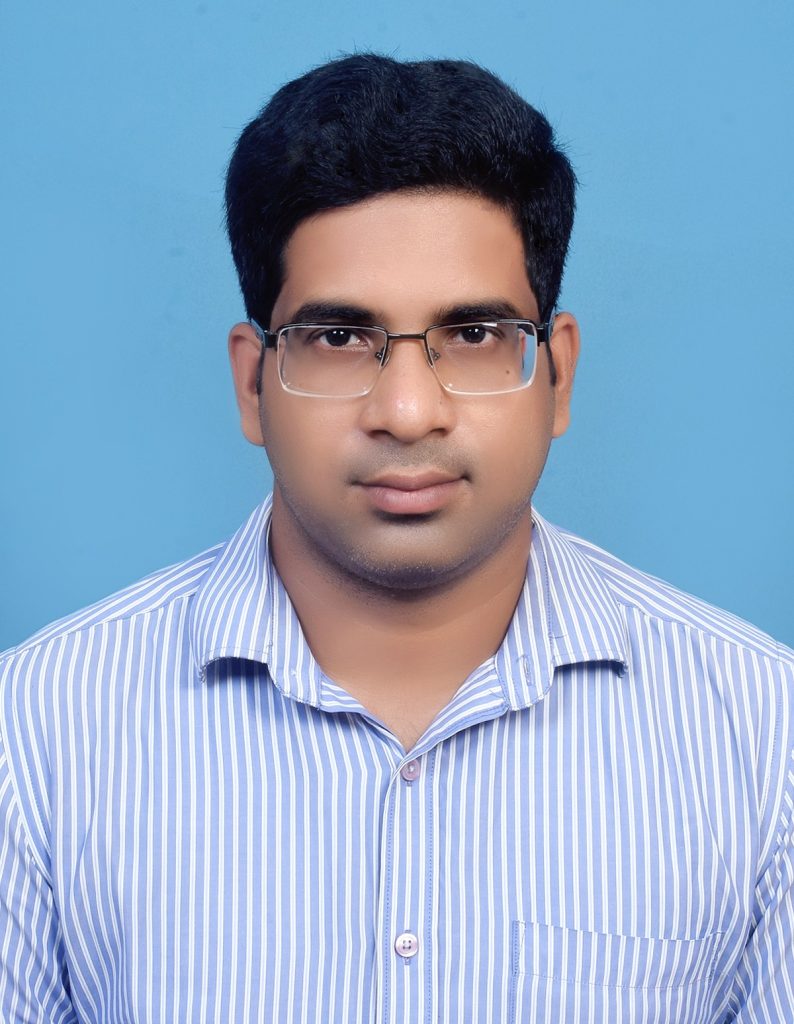
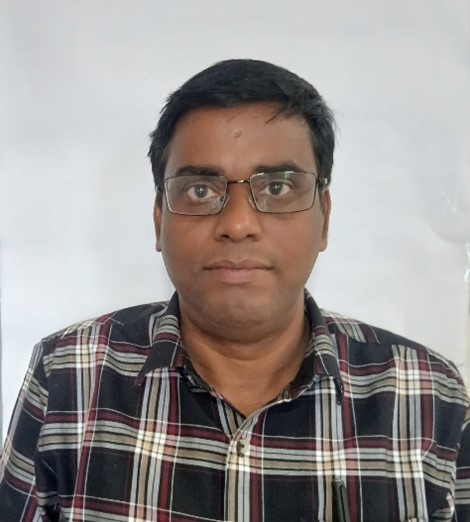
Dr. Chitrasen Samantra

Assistant Professor (Selection Grade) (HOD in-charge)

Areas of Interest:

Production Engineering

Guest Faculties

Dr. Kali Charan Sabat

Guest Faculty

Areas of Interest:

Corrosion, Metallurgical Thermodynamics, Physical Metallurgy, Hydrogen Plasma Processing of Materials

Mr. Rahul Ranjan Mohanta

Guest Faculty

Areas of Interest:

Physical Metallurgy, Extractive Metallurgy

Mrs Sahukari Nagamani

Guest Faculty

Areas of Interest:

Mechanical Metallurgy, Powder Metallurgy, Mineral Processing

Mr. Ashok Kumar Mishra

Guest Faculty

Areas of Interest:

Iron making & Steel Making

Mr. Sambit Kumar Sahoo

Guest Faculty

Areas of Interest:

Phase Transformation, Material Science, Bio Material, Characterization of Material & Fracture Analysis

Laboratory Assistant

Mr. Debasisha Sahu

Laboratory Assistant

Qualification:

Mr. Satyajit Bisoi

Laboratory Assistant

Qualification:

To be updated soon...